
119. Dagger (Jambiya) with Scabbard
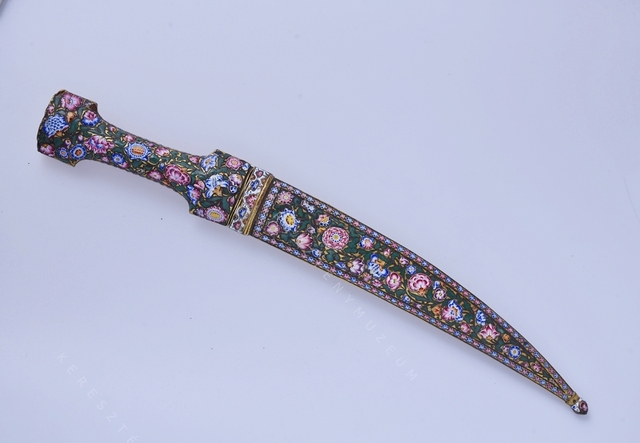
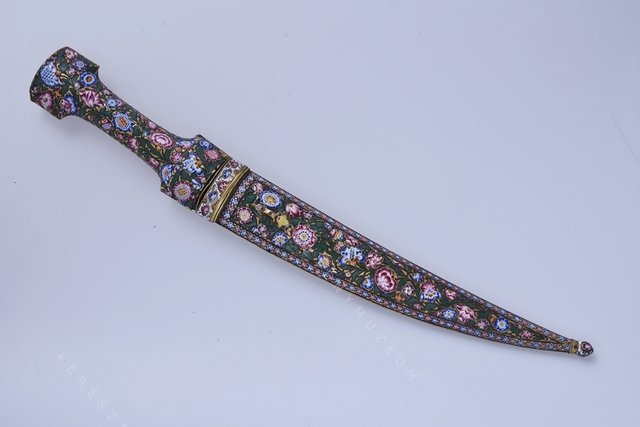
A short, curved Arab dagger of Yemeni origin. Boys and men over the age of fourteen traditionally wore it tucked into their belts, as suggested by the meaning of its name: “at the side.” Its double-edged blade is made of steel, while the sheath usually has a wooden core. Depending on the richness of their decoration, jambiyas indicate the rank and social status of their owners.
Today, the jambiya continues to play a ceremonial role in rites marking a boy’s passage into manhood, as well as in oath-taking and the conclusion of agreements. Almost every Arab man owns such a dagger. If it is confiscated as a punishment by the authorities or tribal leaders, while the empty sheath is left in place, the owner is placed in a deeply humiliating position.